I am the Queen of Awesome. My words do not represent my employer, but I bet you already knew that.
18852 stories
·
35 followers

Do I belong in tech anymore?

1 Share

Two weeks ago, I quit my job.

It wasn’t a bad job, not by most metrics. It ticked the boxes a job is supposed to tick: good pay. Health insurance. Remote work. Time off. Nice coworkers.

I worked as our org's only design engineer and maintainer of our design system. My job was to build components, to polish the final product that went out into the world, and to bridge gaps between design and engineering. During my time, I doubled surface coverage of our components, chipped away at bugs, and fixed accessibility issues. I published documentation. I administered twice-yearly surveys which indicated high satisfaction from the team—up significantly compared to when I began. I was doing good work.

And yet, work was rendering me increasingly miserable. I questioned myself. Why am I here? Does any of this work actually matter? And if I stop caring about the quality of my work... will anyone notice? (An uncomfortable thought.)

I knew I was tired, but I wasn't sure if I wanted to quit. I took a week off to consider it, and told myself: if you still want to leave at the end of this week, hand in your resignation.

The following Monday, I handed in my resignation. I felt immediate relief. I had nothing else lined up, but I knew I needed to go. I'm unsure when (or if) I'll return to full-time tech work.

What happened?

<figure> A hand holds an iPhone with a shattered glass exterior.(quality:90) <figcaption> Not long after quitting, my phone dropped and shattered. Photo by the author. </figcaption> </figure>

The psychic toll of AI

Consider the following scenarios:

  • You join a meeting with a coworker. Your coworker has enabled an AI tool to automatically take notes and summarize the meeting. They do not ask for consent to turn it on. The tool mischaracterizes what you discuss.
  • A team lead adds an AI chatbot to a Slack channel. Anyone can tag the bot to answer questions about the company's products. Coworkers tag the chatbot many times a day. You never see someone check that the bot's responses are correct.
  • An engineer adds 12,000 lines of code affecting your app's authentication. They ask that it be reviewed and merged same-day. Another engineer enlists a "swarm" of AI agents to review the code. The code merges with no one having read the full set of changes.
  • A designer is tasked with exploring a new feature. They prompt an AI tool for an interactive prototype. Design crit is spent analyzing visual details in the generated prototype, with minimal discussion of core ideas, goals, or tradeoffs.
  • One of your pull requests has been open for a few days. You ask other engineers to leave a code review. Minutes later, an engineer pastes a review that was generated by an AI tool. There are no additional thoughts of their own.
  • You point an engineer to the relevant section of a library's docs in order to request a feature. They tell you that the feature request is not possible, and send a screenshot of their chat with an AI tool as proof.
  • Documents and code are being generated faster than team members can review. You get the feeling that most people have stopped reading altogether.
  • Organization leadership has mandated that each person adopt new AI tools to "uplevel" themselves and their team.

I encountered each of these scenarios over the past few years, and each one left me wondering: do I raise an issue about AI here? Do I ask my coworker to disable their note-taking tool, or do I allow them to record me? (Where does the data go? Who is reading it? Do we retain knowledge in the same way without manual note-taking?) Do I voice concerns over unread code entering the codebase, and the consequences of that pattern for institutional knowledge-building? Do I ask others on the design team to delay prototyping until later in the design process? Is it already too late to ask? Has the team already shipped the code, already designed the feature, already moved onto the next task? If someone requests my review on a pull request that was clearly vibe coded, do I review the code and write comments as usual, or send it back to them for self-review? Would initiating these discussions result in interpersonal stress? Should I just let things slide? Would I become known as a "difficult" coworker for pushing back on AI use? Does any of it really matter? Does anyone really care?

All of these questions consumed energy. Whether I decided to confront them or not was moot: they left me tired and alienated either way. AI had hooked its tendrils into every corner of my work life. Even if I, personally, abstained from most AI usage, I was steeped in an environment which made it impossible to avoid. Pushing back felt futile.

<aside> I prefer to avoid AI usage for ethical, practical, and financial reasons.

  1. Ethically: Generative AI tools, powered by data centers which consume vast amounts of water and pollute our environment, are built on the collective theft of the works of millions of artists, developers, authors, and other creatives, supercharge the spread of disinformation and fascism, have repeatedly provoked psychosis and suicide, and concentrate wealth in fewer hands while providing cover for widespread layoffs.
  2. Practically: I have found that AI tools overcomplicate implementations and that cleaner, simpler solutions can often be written by hand. AI doesn't "know" anything, and is making life worse for open source maintainers. Overreliance on AI risks deskilling.
  3. Financially: I dislike sending money to large corporations when alternatives include learning the skill for free and contributing to open source projects. Tokens are currently heavily subsidized and likely to become more expensive, so I would prefer not to make a habit of using them.

I use AI tools sparingly for assistance while refactoring code in languages I understand. I occasionally use it to help compose command line arguments for tools like ffmpeg. I never use AI to generate images, video, or prose. </aside>

The explosion of AI has played a significant role in my own burnout. Worse, it feels inescapable. Few tech organizations are taking a principled stance against AI use.

But AI use is only one part of broader social trends within tech that leave me questioning whether I should remain here.

The loss of an ideal

When I started full-time design and dev work in the 2010s, tech was generally understood to be a progressive place. This was peak "fun tech job" era, with magazines publishing glossy covers about life at Google. Apple had a gay CEO!

The web was still in flux; as a designer, the prospect of shaping sites into more usable forms excited me. Usability and user-centered design were hot topics. Budding federal organizations like 18F and the United States Digital Service were embarking on meaningful technology-enabled civic work.

After Trump's first election, people recoiled with shock and disbelief. How could this happen? Many organizations distanced themselves from the administration and reiterated their commitment to equality. Then, the COVID-19 pandemic hit, alongside a surge of protests for racial justice. There was a glimpse of unity. Biden was elected and swiftly proclaimed a return to "normal".

"Normal" landed us where we are now: the second Trump administration, more flagrantly corrupt and cruel than the first. Protests surge (larger than ever!) amidst a quieter type of elite resignation. The words "equity" and "inclusion" are no more.

Tech organizations have now given up on pushing back against an unethical and violent administration, deciding that it is in their best business interest to flatter the president's ego with gold trophies and pandering praise. Elon Musk and the "Department of Government Efficiency" took a sledgehammer to 18F and replaced it with National Design Studio, a propaganda shop whose main talent is building expensive and inaccessible landing pages.

Leaders at Google have abandoned former climate pledges as they work to build new data centers powered by natural gas turbines which emit more carbon than the entire city of San Francisco. Other tech CEOs smile for photos alongside war criminals.

<figure class="no-bleed" style="max-width: 560px;"> A tweet from Guillermo Rauch, who posts: "Enjoyed my discussion with PM Netanyahu on how AI education and literacy will keep our free societies ahead. We spoke about AI empowering everyone to build software and the importance of ensuring it serves quality and progress. Optimistic for peace, safety, and greatness for Israel and its neighbors." Attached is a photo of Rauch posing with Benjamin Netanyahu. Posted September 29, 2025.(quality:100) <figcaption> Guillermo Rauch, CEO of Vercel, poses with Benjamin Netanyahu, prime minister of Israel. The International Criminal Court has issued an arrest warrant for Netanyahu for "war crimes of starvation as a method of warfare and of intentionally directing an attack against the civilian population." Original tweet. </figcaption> </figure>

I keep asking myself:

What happened to the principles that were professed a decade ago? To address climate change? To reduce racial, gender, and economic inequality? To "don't be evil"?

Were these principles abandoned, or were they merely born of convenience?

Has tech always been like this? Was I just blind to it before?

When I say that I am burnt out I do not mean simply that I am tired. I'm referring to the "emotional experience of political defeat":

Burnout in Freudenberger’s articles from this period is not just defined in terms of physical tiredness as a result of doing too many things; rather, it emerges from emotional investment in a cause and from the disappointments that arise when flaws in a political project become apparent. Freudenberger’s concept not only describes physical exhaustion but also acknowledges the need to deal with anger caused by grief brought about by the “loss of an ideal.” Burnout in the context of social justice projects thus often involves a process of mourning, according to Freudenberger. Returning to his earlier writings on burnout makes it clear that when understood as a malaise arising from politically committed activities, burnout cannot be equated with tiredness or stress.

<cite>Hannah Proctor, Burnout, p. 92</cite>

I love designing and building things for the web, but I'm mourning an industry that does not share the ideals I once thought it did.


I understand why people use AI. Life can be difficult and confusing. Prompting the machine is so alluring—it answers with such certainty! How could it be wrong? (And even if it is a little wrong, well... hasn't it saved time? Does it need to be perfect?) The temptation is real.

I don’t blame people for opting to use tools that promise quick, convenient solutions to problems. We all operate under capitalism. Many of us have bullshit jobs where the goal is not, in fact, to make something good, or even to learn, but to simply make money to pay rent and medical expenses. To hopefully find a little joy on the side. The whole system is broken; AI alone didn't break it, but it is widening the cracks.

I guess what I'm trying to say is I wish none of us had to live like this. I would like to imagine a future that does not look like this.

Ironically, what I've gained from AI is a deeper appreciation for human communication, in all its messy imperfection. The point of a code review is not simply for good code to make it into a codebase, but to build institutional knowledge as people debate and iterate and compromise, slow as it may be. Friction is good.

<blockquote class="bluesky-embed" data-bluesky-uri="at://did:plc:xfjf7fkhv6rwsx5e6p2ar37o/app.bsky.feed.post/3midldzhcdc26" data-bluesky-cid="bafyreid2n3rks7uaki5mqzi55obgrmvj7av5bf6wiixaqanxf6bvrwoycq" data-bluesky-embed-color-mode="system"> <p lang="en"> I’ve posted it before, but it feels evergreen

The two hardest problems in Computer Science are

  1. Human communication
  2. Getting people in tech to believe that human communication is important </p> — Hazel Weakly (<a href="https://bsky.app/profile/did:plc:xfjf7fkhv6rwsx5e6p2ar37o?ref_src=embed">@hazelweakly.me</a>) <a href="https://bsky.app/profile/did:plc:xfjf7fkhv6rwsx5e6p2ar37o/post/3midldzhcdc26?ref_src=embed">March 31, 2026 at 2:46 AM</a> </blockquote><script async src="https://embed.bsky.app/static/embed.js" charset="utf-8"></script>

Where do I go from here?

No matter how rapidly technology changes, I am coalescing around some core beliefs:

  1. Things that are worth doing are worth doing well.
  2. Things that are done well require time and effort.
  3. You make meaning through the doing.
  4. Ideas are common; effort is not.
  5. There are no shortcuts.

I am, as it stands, without a job. Recovering from burnout will take time. Thankfully, I have savings that afford me the privilege to take that time. I’m distancing myself from social media and news, at least for a little while. At some point, I will need to decide if I want to remain in this industry, and if so, where to go next.

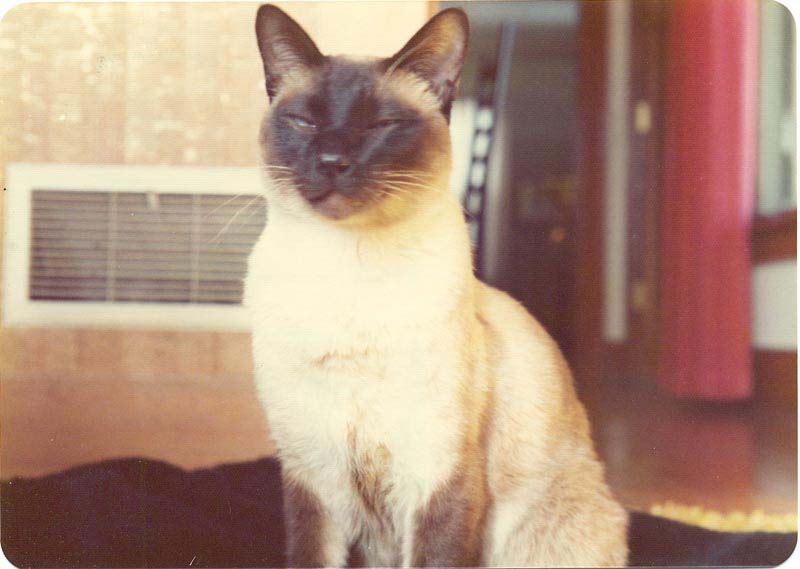
In the meantime, I’m going to the gym. (Crossfit, weirdly.) I’m learning more about how synthesizers work and I'm generating different sounds. I’m looking at birds. I'm looking at my cat. I’m continuing to build tools to help trans people with legal name changes. I'm spending time with friends.

Eventually I will find new work. Who knows where.

Read the whole story
angelchrys
43 minutes ago
reply
Overland Park, KS
Share this story
Delete

04/28/2026

1 Share

04/28/2026

Knees!

Read the whole story
angelchrys
2 hours ago
reply
Overland Park, KS
Share this story
Delete

US millionaire big-game hunter dies after being crushed by elephants | California | The Guardian

2 Comments

An American millionaire big-game hunter has died after being crushed by a group of elephants during a hunting expedition in Gabon.

Ernie Dosio, a 75-year-old vineyard owner, was hunting yellow-backed duiker, an antelope species, in the central African country of Gabon when the incident occurred last Friday. While in the Lope-Okanda rainforest, he and his guide unexpectedly came across five female elephants accompanied by a calf.

Originally from Lodi, California, Dosio had built an extensive collection of hunting trophies over the years, including animals such as elephants and lions. He was reportedly a familiar name within the Sacramento Safari Club.

According to the Daily Mail, safari operator Collect Africa confirmed the death of its client. The company also reported that the professional hunter guiding Dosio sustained serious injuries during the encounter.

Reflecting on Dosio’s life, a retired hunter who knew him shared with the UK outlet: “Ernie has been hunting since he could hold a rifle and has many trophies from Africa and the US. Although many disagree with big-game hunting, all Ernie’s hunts were strictly licensed and above board and were registered as conservation in culling animal numbers.”

The same source, based in Cape Town, described the incident as the elephants being “surprised” by Dosio and his guide’s presence.

Dosio was the owner of Pacific AgriLands Inc, a company managing 12,000 acres of vineyard land in Modesto, as well as offering services and equipment financing to wine producers. Officials from the US embassy in Gabon are now coordinating the return of his remains to California, the Mail reported.

Gabon’s forests are known to shelter approximately 95,000 forest elephants, most of the species’ global population, which are considered highly endangered.

Every year, clients of the trophy-hunting industry claim the lives of tens of thousands of wild animals across the world. Legal hunting tours in Africa are popular with some wealthy Americans, including Donald Trump Jr, who was pictured holding a severed elephant’s tail more than a decade ago.

International trophy hunting is a multimillion-dollar industry. In South Africa, estimates for the industry’s worth range from $100m in 2005, to $68m in 2012, and $120m in 2015, according to the EMS Foundation.

During his first presidential term, Donald Trump created a controversial wildlife advisory board to help rewrite federal rules for importing the heads and hides of African elephants, lions and rhinoceroses. The board was disbanded in 2020 after lawsuits alleging it was an illegal, biased panel stacked with trophy hunters rather than conservationists, who worked to promote the economic benefits of big game hunting.

Last year, another American game hunter was killed by a buffalo he was stalking during a hunting expedition in South Africa.

Read the whole story
angelchrys
2 days ago
reply
So it goes
Overland Park, KS
acdha
3 days ago
reply
No loss
Washington, DC
Share this story
Delete

Finally! The Trailer for the Coyote vs. ACME Movie.

1 Share

We thought this day would never come. But we kept the faith and now we can begin to reap the rewards: there is actually a trailer for the Coyote vs. ACME movie and the movie itself is actually coming out on Aug 28.

Quick recap of the situation so far: Ian Frazier wrote a story for the New Yorker in 1990 about an imagined lawsuit brought by Wile E. Coyote against the Acme Company. Fast forward to 2022-23: James Gunn, Dave Green, Will Forte, and others make a movie based on the NYer article…and then Warner Bros. shelves the movie to take a tax write-off. Like, they are going to destroy the completed film. And now, somehow, miraculously, Warner seems to have finally done the right thing and sold the rights to the film so it can be released (which is theoretically the primary reason for their business, releasing movies).

Tags: business · Coyote Vs. Acme · movies · video

Read the whole story
angelchrys
6 days ago
reply
Overland Park, KS
Share this story
Delete

That's Not What Unc Means

1 Comment and 2 Shares
That's Not What Unc Means

“Unc” is, apparently, the latest gamer term or gen Z slang to enter our common parlance. Articles have argued it originated recently, from young people, who use it as an insult to old people. Except that’s not what unc means, and that’s not where it came from.

Unc, short for uncle (though it’s also been argued, incorrectly, that it’s a shortening of “uncool”), can sometimes be used for gentle ribbing, but fundamentally it’s a term of respect. It’s not a term you bestow upon yourself, but instead a natural consequence of getting older and still showing up tell the youngbloods what’s up. You wanna know who’s really unc? Denzel Washington. That’s not because Denzel is uncool or out of touch, but because he has had a long and illustrious enough career to earn the respect of the younger generation.

The old black man who used to run a record shop that closed during COVID where I picked up a copy of the album The Name Of This Band Is Talking Heads is unc to me. My dad, the kind of guy who went down to our local college campus to give advice to students in the encampment for Palestine, is unc. The nice older man who sits on a folding chair outside of his apartment and sometimes asks me to grab him a water bottle from the bodega is unc. I love that guy. Evan Narcisse is unc, and not just because he insists on wearing salmon-colored pants, but because he’s acted as a mentor to me ever since I started working at Kotaku, and I’d never pass up a chance to playfully razz him a little bit. 

You’d never know the meaning of unc or its origins in black culture if you looked to mainstream media, and sometimes even independent media. The Guardian attributes this slang to “gen alpha” and cites examples such as people calling Timothee Chalamet “unc” for turning 30, which isn’t really that old. This was then cited as the definition in my colleague Keza MacDonald’s article about “unc games,” though the article has since been corrected to include a reference to the term’s origins in African American Vernacular English. This article also references an article written by my old boss at Vice’s Motherboard, Emmanuel Maiberg, who wrote about Marathon as a so-called “unc game.”

These false etymologies get reinforced through incurious reporting. 

“As you probably know, unc, short for uncle, is a way to jokingly refer to old, potentially out of touch people,” Maiberg writes. “As far as I can tell, it entered the video game discourse in the form of this meme in which a soyfaced unc excitedly points at the hall of fame of so-called ‘unc slop,’ or, in other words, games that old people say are very good.”

Though I love the writing of both MacDonald and Maiberg, they are both doing something that I have observed in the online fandom for video games for some time. Black people who play video games talk about the games in the terms that they are familiar with, then other, non-black people who play games pick up these terms and run with them. Suddenly, these slang terms become “gamer slang” rather than African American Vernacular English, and these false etymologies get reinforced through incurious reporting. 

It isn’t that MacDonald or Maiberg themselves are the appropriaters. In fact, it’s hard to blame them for not knowing the origins of a slang term that has been so thoroughly appropriated already. But this is a cycle I have watched for a long time, and reporters writing about slang terms black people have used for decades as fresh and new is the end result of that cycle. They get to be discoverers and explainers of something that has already been discovered and explained.

More broadly, I’ve also seen this happen to words and phrases like “chopped,” “clocked it,” “the tea,” “no cap,” and “it’s giving.” All of these are slang terms that originate from African American Vernacular English—“clocked it,” “the tea” and “it’s giving” come from black queer culture in specific—but have now been categorized as “gen Z slang.” I have heard some people start to refer to the habitual be, as in “it really do be like that,” as a “meme” and it makes me want to tear my fucking hair out. We been saying that! That one’s ours!

Non-black people want to take everything from us except the weight of our history.

Appropriation of black culture is nothing new to the internet or the world. When TikTok dances were all the rage, Taylor Lorenz tracked down the originator of the popular “renegade dance,” a black teenage girl who had been all but forgotten as original choreographer of the short routine. The teenage girl who originated the phrase “on fleek” was also almost immediately erased as the term gained popularity as slang. Even farther back than that, I remember my African American Studies professor in college showing us a book cover for a book of essays on this very topic that he felt was illustrative of the way that black culture is extracted from our communities and then commodified: On it was a photograph of a white teenage boy wearing baggy jeans with his boxers showing, which was a style that was popularized in 90s hip hop culture. The title of the book is Everything But The Burden, as in, non-black people want to take everything from us except the weight of our history.

The internet has hyper-accelerated this extractive process of appropriation. Black teenagers spend more time on social media of all kinds than their non-black peers, and thus have made black slang much more visible than ever before. It’s not a surprise that AAVE has become the language of the internet at large, but also, it’s become much harder to track the flow of language and place it in its proper context. Because of how quickly trends form and then dissolve on the internet—remember “mob wife” and “office siren”?—slang is also picked up, stripped from context, and then discarded at much faster rates than when I was younger. 

It’s also much more difficult to trace the origins of these pieces of terminology, given that much of their dissemination occurs in short form video content on a platform that actively censors its search results. Like Taco Bell does with food, platforms like TikTok and Twitter are incentivized to strip context from language, because then it can be flattened into a saleable product that can be co-opted by corporations. (You can see this in the saga of West Elm Caleb, which turned from a funny story about a bunch of people dating the same guy to a tweet from the Hellman’s Mayonnaise brand.)

Seeing unc stripped of its meaning actually makes me a little sad.

In 2021, Sydnee Thompson at BuzzFeed wrote about the tendency of the internet to extract and then decontextualize black slang, saying that media outlets often cement that decontextualization that is already extant through their reporting.

“When media outlets — including BuzzFeed — and individuals who discuss memes and popular culture reproduce instances of Black American cultural appropriation, they lend them more credibility,” Thompson wrote. “The BuzzFeed Style Guide includes entries for many of these slang terms … and there exists a question of whether we should note their AAVE origins when they come up in a story. Doing so would help put concepts in their proper context and make it more difficult for culture vultures to appropriate with impunity.”

At least in the cases of “on fleek” and the renegade dance, the appropriated trends were short-lived, flash in the pan ideas. But “unc” is something embedded more deeply into black culture, and seeing it stripped of its meaning actually makes me a little sad. If there’s anything insulting about being called unc, it’s the kind of insult that’s meant to bring people closer together, not reinforce an artificial boundary between generations. It’s a word you use for people who are actively in community with you, not people you are trying to shut out. 

I’d love to be unc someday—to be so respected by younger people that they know it won’t hurt my feelings to call me old. When I call someone unc, I don’t want anyone to think I’m insulting the generation older than me, or that becoming unc is in some way a bad thing. That’s not what it means or has meant to me, and I don’t want its meaning to be taken away.

Read the whole story
rocketo
12 days ago
reply
“ If there’s anything insulting about being called unc, it’s the kind of insult that’s meant to bring people closer together, not reinforce an artificial boundary between generations. It’s a word you use for people who are actively in community with you, not people you are trying to shut out.”
seattle, wa
angelchrys
10 days ago
reply
Overland Park, KS
Share this story
Delete

Marvel at Manabu Kosaka’s Hyperrealistic Paper Sculptures of Retro Objects

1 Share
Marvel at Manabu Kosaka’s Hyperrealistic Paper Sculptures of Retro Objects

It’s one thing to marvel at the inner workings of a transistor radio or a timepiece, but for artist Manabu Kosaka, that curiosity reaches a whole new level. Using nothing but paper, the artist makes scale replicas of cameras, watches, gaming consoles, shoes, food, and more with a preternatural attention to detail. Not only does a 35mm film camera include a strap and a back hatch that opens, the lever used to advance the film and other gears are also built into the top, some of which are even moveable.

Around ten years ago, Kosaka faced uncertainty about the direction of his work. “During that time, I spoke with a friend who works in art direction, and they suggested that I try creating with simpler materials in a more minimal way,” he tells Colossal. “That advice stayed with me, and gradually I began focusing on paper as my primary material, eventually deciding to work exclusively with it.”

a hyperrealistic, scale sculpture of a 35mm camera made from white paper
35mm camera

Through a meticulous process of cutting, folding, and scoring, Kosaka creates incredibly realistic depictions of everyday objects, often with a retro twist. He carefully studies the mechanics of the real objects, disassembling them in order to replicate individual components inside. He is currently working on a model of a Playstation 2 console, which was originally released in 2000.

“What I love most about paper is its incredible flexibility,” Kosaka says. “It responds to my ideas almost completely—beyond what I expect, even. It allows me to express what I want in a very direct way, while also feeling that it can become almost anything.”

See much more on the artist’s Instagram.

a hyperrealistic, scale sculpture of a 35mm camera made from white paper, shown open at the back
35mm camera
a hyperrealistic, scale sculpture of a large-format camera made from white paper
Large-format camera
a hyperrealistic, scale sculpture in progress, eventually to depict a large-format camera, shown on a studio table covered in pieces of paper
Large-format camera in progress
a hyperrealistic, scale sculpture of a video game console made from white paper
Game console
Game console in progress
a hyperrealistic, scale sculpture in progress, eventually to depict a game console, shown on a studio table covered in pieces of paper
Game console in progress
a hyperrealistic, scale sculpture of a small radio made from white paper
BCL Radio
a hyperrealistic, scale sculpture of a watch made from white paper
Wristwatch
a hyperrealistic, scale sculpture of a watch made from white paper
Alternate view of wristwatch
a detail of a hyperrealistic, scale sculpture of a watch made from white paper
Detail of wristwatch
a hyperrealistic, scale sculpture of a Big Mac burger and its container made from white paper
Big Mac
a hyperrealistic, scale sculpture of a Big Mac burger and its container made from white paper
Big Mac

Do stories and artists like this matter to you? Become a Colossal Member today and support independent arts publishing for as little as $7 per month. The article Marvel at Manabu Kosaka’s Hyperrealistic Paper Sculptures of Retro Objects appeared first on Colossal.

Read the whole story
angelchrys
12 days ago
reply
Overland Park, KS
Share this story
Delete
Next Page of Stories