Back in 2024, Anil Dash published Don't Call it a Substack - an informative post about Substack's problematic history and foundations. This sums it up nicely:
Substack is, just as a reminder, a political project made by extremists with a goal of normalizing a radical, hateful agenda by co-opting well-intentioned creators' work in service of cross-promoting attacks on the vulnerable.
That may sound like an extreme review but the receipts are in the post. It's well noted on Wikipedia too, Substack allows Nazi content "because attempting to censor them would make the problem worse." Great, right? /s
I am sure there is a bit of fatigue when it comes to thinking about what is a "Good" platform. Meta is a nightmare company but I still use Instagram. I left Spotify because of unfair artist treatment but I use YouTube Music instead... is Google really a "good" company? I left Twitter when Elon took over and, well, I do feel good about that one. Substack feels like a benign example when compared to the worst offenders but I bring this up just so you are aware. It's worth considering going elsewhere.
Kansas voters rejected a ballot measure that would have made members of the state’s Supreme Court electable by popular vote — a seemingly technical issue that had become a proxy battle for the future of abortion rights in the state, Decision Desk HQ projects.
Conservatives in the state’s Republican-led legislature put forth the proposal in an effort to remake Kansas’ high court, which in 2019 issued a pivotal decision holding that the state constitution guaranteed the right to an abortion. Three years later, in 2022, Kansas voters rejected a measure that would have undone the court’s decision — securing the Sunflower State’s status as a destination for people seeking abortion from neighboring states such as Texas and Oklahoma, which have both banned the procedure.
State Attorney General Kris Kobach — then a candidate for the position — suggested in 2022 that abortion opponents should pivot to change the makeup of the state Supreme Court. A move to elect justices, he said, could enable lawmakers to “slowly and quietly” develop an anti-abortion judiciary that might ultimately overturn Kansas’ abortion rights protections.
The measure’s failure means that members of the Kansas court will continue to be appointed through a process in which the governor selects people from a list curated by a nine-member commission. The commission includes lawyers across the state who are elected by other Kansas attorneys, as well as non-lawyers selected by the governor.
Kansas Republicans argued the measure would impose needed transparency and accountability into the selection of court members. The measure’s opponents also argued that changing the court’s selection mechanism would empower billionaire donors to select justices, a point hammered in a TV ad from a progressive coalition called Kansas United for Impartial Groups.
Other states have indicated the potency of abortion in state court elections, and the massive levels of spending that can be funnelled in when voters directly elect members of their high courts.
In Wisconsin, where Supreme Court members are elected by popular vote, judicial elections in 2023 and 2025 — both races where liberal candidates emphasized their support of reproductive rights — shattered spending records, indicating “an era of rapidly intensifying state judicial politics,” wrote Douglas Keith, a deputy director at the Brennan Center for Justice, a nonpartisan civil rights group.
Opponents of the measure — including the state’s chapter of the ACLU and Planned Parenthood Great Plains Votes, the healthcare provider’s advocacy arm — also framed the race as a contest about reproductive rights and an effort to relitigate the 2022 election.
“Kansas is surrounded by states with abortion bans. We continue to see people coming from out of state for care here,” said Emily Wales, who heads Planned Parenthood Great Plains. “Abortion rights are clearly the focus of the legislature.”
In 2024, the most recent year for which state data is available, about three-quarters of all abortions in Kansas — around 15,000 out of just over 20,000 — were for people from other states, namely Texas, Oklahoma and Missouri. Since then, Missouri has passed ballot measures restoring state abortion rights. In Texas and Oklahoma, abortion remains almost entirely outlawed.
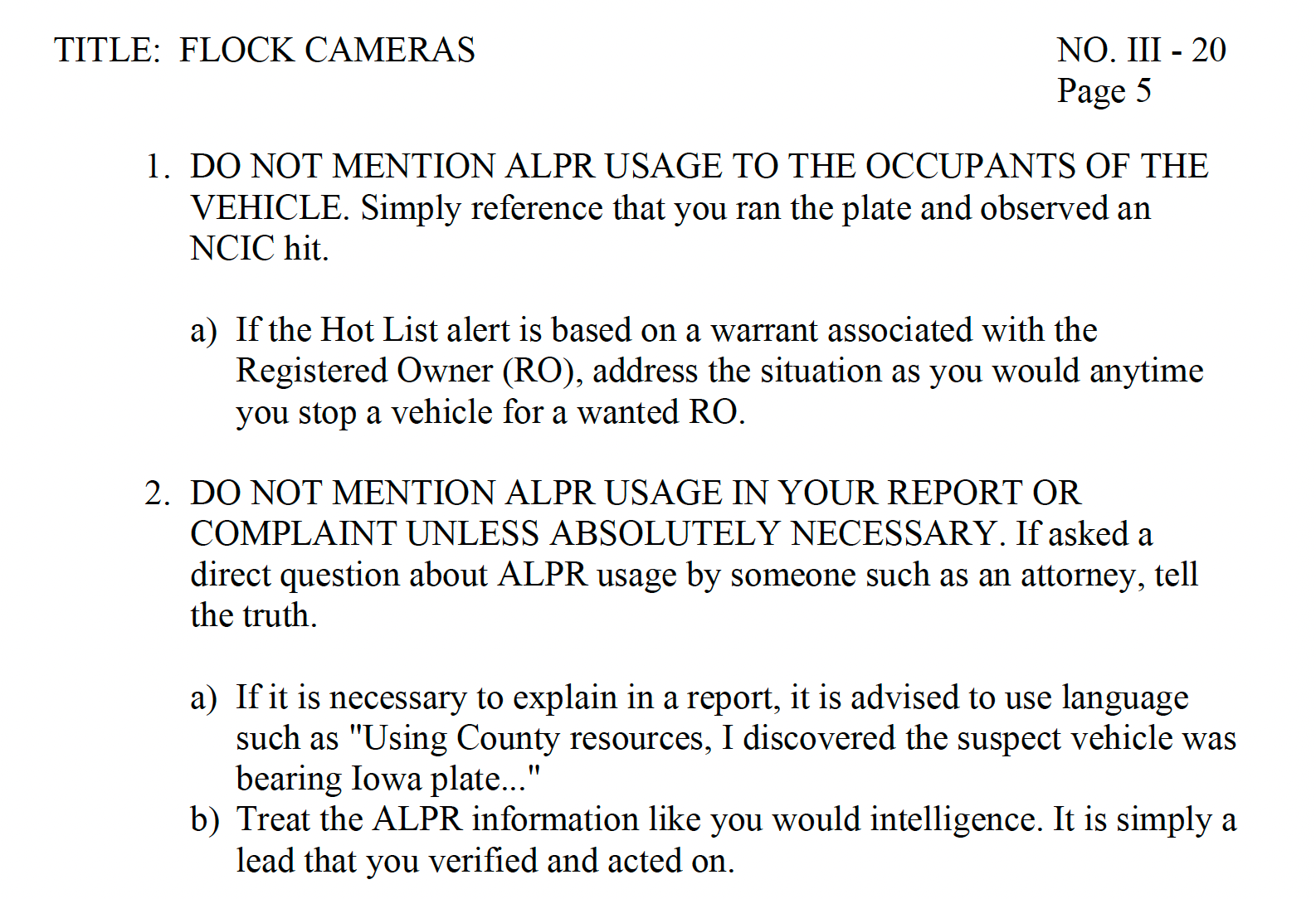
When cops use Flock to arrest someone in Wapello County, Iowa, they don’t want them to know. A usage policy for the automated license plate reader cameras in the county tells police, in no uncertain terms, to keep them a secret: “DO NOT MENTION ALPR USAGE TO THE OCCUPANTS OF THE VEHICLE,” the policy document reads. “DO NOT MENTION ALPR USAGE IN YOUR REPORT OR COMPLAINT UNLESS ABSOLUTELY NECESSARY.”
The police guidance document is unusual in how clearly it tells police not to mention their Flock use, but it also highlights several important things in the Flock debate. While Flock likes to say that it is a transparent surveillance company and that it cares about “accountability” and “governance,” some of its customers believe its use should be kept secret. Flock is now operating in thousands of cities and towns, and when, how, and why police use the system is wildly inconsistent. Even though Flock does have various auditing and transparency tools, police have their own opinions about what Flock can and should be used for and what the policies for it should be.
It is not just local police in small communities who are creating policies designed to obfuscate Flock usage. Earlier this year, we reported that police in multiple states were being told to be “as vague as permissible” about why they were using Flock because their searches could be obtained using public records requests, and that warning was being shared by the FBI and Department of Justice. Residents of many towns using Flock also say that their cities entered into contracts with Flock with little public oversight, essentially quietly opting them into a nationwide surveillance network without robust public debate.
Wapello County’s “standard operating procedures” document for Flock cameras was created in November of 2025 and was obtained by a 404 Media reader using a public records request and was shared with us. Coincidentally, Wapello County’s largest city is Ottumwa, Iowa, where 404 Media ran a Super Bowl commercial earlier this year. The county has four Flock cameras via a contract it signed with the company in late 2024. The policy further instructs police to be vague in any arrest report, suggesting that they simply call the Flock system “county resources.”
“DO NOT MENTION ALPR USAGE IN YOUR REPORT OR COMPLAINT UNLESS ABSOLUTELY NECESSARY. If asked a direct question about ALPR usage by someone such as an attorney, tell the truth,” it says. “If it is necessary to explain in a report, it is advised to use language such as ‘Using county resources, I discovered the suspect vehicle was bearing an Iowa plate.’ Treat the ALPR information like you would intelligence. It is simply a lead that you verified and acted on.”
The guidance to keep Flock use secret is reminiscent—but less extreme—than guidance on some other secretive police technologies. For years, police tried to hide the existence of cell site simulators (popularly known as Stingrays), going as far as to drop criminal cases where it was likely that a judge would expose information about them. Stingrays are essentially fake cell phone towers that can be used to identify the phones of people in a specific area.
In the public records request, Sheriff Don Phillips said “there is no need” to tell people about the use of Flock.
“Our policy requires deputies to check the license plate to make sure the correct plate is accurate and the information as to an arrest warrant, stolen vehicle, stolen plate or missing person is correct,” he said. “There is no need to tell them about our investigative methods or sources, such as the camera system, because the information is verified by the deputy running the license plate. It is common practice for law enforcement to refrain from disclosing investigative methods and sources to prevent criminals from learning how to circumvent them.”
Phillips did not respond to a request for comment.
Donors have flooded organizations with millions of dollars ahead of the Aug. 4 vote on a ballot question that could change the way Kansas Supreme Court justices are selected. (Photo by Anna Kaminski/Kansas Reflector)
TOPEKA — Partisan donors have spent at least $12.8 million in Kansas on dozens of television ads and stacks of mailers, advocating for or against a ballot referendum that could determine the political temperature of the state Supreme Court for generations.
From county political parties to dark money mega-donors, Kansas’ “vote yes” and “vote no” campaigns are benefiting from millions in outside spending from high-profile financiers, seeking to influence Tuesday’s vote on a proposed constitutional amendment that asks Kansans if they want state Supreme Court justices to be selected by popular vote.
“Vote yes” ads have warned of “leftist elites” maintaining an unfair status quo on the bench. “Vote no” ads warn of “corrupt billionaires” seeking to control the court’s interests. Out-of-state backers have funded campaigns on both sides, according to state campaign finance records, up to July 20, the last campaign finance reporting date until October.
In Tuesday’s primary election, voters will choose whether to oppose or support a constitutional amendment that would, if passed, eradicate the current system of selecting Kansas Supreme Court justices and allow sitting justices and candidates for the open seats on the court to make political contributions and take part in political campaigns.
A “no” vote would maintain the current merit-based system. A nominating commission, which is made of up five lawyers who are put on the commission by other lawyers and four non-attorneys selected by the governor, chooses candidates to interview from a pool of prospective justices. The commission nominates three candidates, and the governor picks a justice from the three. Sitting justices undergo recurring retention votes in the next general election, and every six years after that.
Kansas has used the current system since voters established it in 1958. Thirteen states elect their Supreme Court justices in nonpartisan elections, and eight use partisan elections. Fourteen states, including Kansas, use merit selection, 10 use gubernatorial appointments, two use legislative appointments and four use a hybrid of elective and appointive methods, according to the Brennan Center for Justice, a law policy organization at New York University Law.
Ad claims
In a “vote yes” video ad paid for by Kansans for Democracy, a voiceover claims the nominating commission operates “behind closed doors, trading favors, rewarding friends.”
“The public can’t see it or control it,” the voice says.
In fact, the commission’s candidate interviews are public and broadcast on YouTube.
Anamarie Rebori Simmons, the communications director for Kansas United for Impartial Courts, which opposes the amendment, said Kansas’ merit-based system is “battle-tested,” and “constitutional experts from across the state select qualified, impartial justices.”
“Billionaire political donors are resorting to lies to try to trick Kansas voters in their desperate attempt to turn our qualified Supreme Court justices into politicians for sale. If this amendment passes, those same donors will be able to spend tens of millions of dollars on ads like this one to influence our courts,” she said.
Kansans for Democracy was the largest financial supporter of the proposed amendment. It is an organization funded with $1.7 million in donations from First Principles Action, a Nashville-based PAC founded in 2024 by the former executive director of the Republican Attorneys General Association. Both have ties to legal activist Leonard Leo, whose network of dark money nonprofits has filtered into state races.
Kansas United for Impartial Courts, which is affiliated with the American Civil Liverties Union and Appleseed, is the single largest spender in advocating for or against the ballot question. It has used rhetoric attempting to appeal to voters who want an unbiased court, and it has relied upon testimony in its ads from former Kansas Supreme Court Justices Carol Beier and Lawton Nuss, who have said a court established by partisan popular vote would be untrustworthy.
Elizabeth Patton, regional director for the Koch-founded conservative advocacy organization Americans for Prosperity, criticized the justices’ involvement. She said Kansas United for Impartial Courts has based its campaign in “deceiving voters that the current selection process is both impartial and non-political.”
“Former Justice Lawton Nuss was admonished for having meetings with lawmakers in active litigation, and former Justice Carol Beier had campaign fundraisers at her house. Members of the selection committee have said on the record that they make political calculations, not merit-based decisions in their nominations. The ‘vote no’ campaign is a campaign to continue this corruption,” Patton said.
Former Kansas Supreme Court Chief Justice Lawton Nuss takes part in a June 16, 2026, panel discussion about the proposed constitutional amendment at Washburn University in Topeka. Natalie Haag, former chief counsel to Gov. Bill Graves and member of the Supreme Court nominating commission, joined him on the panel. (Photo by Jessica Tufts for Kansas Reflector)
Nuss was admonished by a disciplinary board in 2006 for violating the judicial code of conduct after he discussed a school finance case over lunch with two Republican state senators.
“This is all a matter of public record from 20 years ago,” Nuss told Kansas Reflector. “Kansans were aware of this information — and my dedicated judicial service — when they voted to keep me as chief justice of their Supreme Court in 2010 and again in 2016. Our constitutional process worked. But now billionaire political donors are trying to change that process for their own gain.”
A state ethics panel dismissed a complaint against Beier in 2016 after it found her husband hosted an event while she wasn’t home for 2014 Democratic gubernatorial candidate Paul Davis.
“This claim is false,” she told Kansas Reflector. “The judicial conduct commission examined and dismissed it many years ago. This is just another last-minute smear — trying to give billionaires power over our high court.”
Kansas United for Impartial Courts has dwarfed groups’ trackable spending on both sides of the referendum. The organization has funneled more than $8.5 million into advertising and advocacy against the proposed amendment, encompassing the vast majority of the “vote no” campaign’s roughly $8.7 million in spending. Ads have included sentiments for keeping the court “fair and impartial” and leaving money out of politics.
Various arms of the American Civil Liberties Union gave the organization around $4 million and Planned Parenthood Action Fund donated $1 million. Oklahoma philanthropist and Kansas City native Lynn Schusterman gave $1 million. Liberal activist George Soros’ Open Society Policy Center gave the organization $400,000.
Americans for Prosperity spent almost $1 million, and Your Right to Vote Association received $700,000 from the nondescript, Virginia-based Impact Mission Fund and $10,000 from Justin Hill, president of The Lawrence Paper Co.
From small donations — such as $306 from the Franklin County Central Republican Committee — to big spenders including Schusterman, the money spent on referendum campaigns in the past year is significantly less than what states that elect judges experience when partisan groups want to move the ideological bent of the courts.
More than $51 million was spent in 2023 in Wisconsin to flip the court’s majority for the first time in 15 years, according to the Brennan Center’s Douglas Keith. In 2025, billionaire Elon Musk waded into the state’s judicial election, and more than $100 million was spent that year, Keith wrote.
‘Squishy’ writing
Democratic Gov. Laura Kelly said after casting her ballot on July 27 that the amendment’s language and advertising about it have been confusing “on purpose.”
She said the constitutional amendment primarily is tied to two issues: Access to abortion and school finance, which the Legislature has unsuccessfully tried to challenge through the courts.
“The Legislature has never accepted the first ruling on either one of those, and so this is their way to change that and to give themselves the authority to decide these things,” Kelly said. “I just hope that people recognize that, and even through all the confusion that they know to vote no.”
The money that might enter Kansas judicial races concerns Barb DeSanto, who worries the biggest pocketbooks will change the courts. It can be difficult to identify the individuals who donate to organizations, adding to the challenge of understanding how voting is influenced.
DeSanto, who taught public relations and journalism for 35 years and retired recently from Kansas State University, reeled off a list of questions about the dollars that might come into the state.
She wants to know how donations will be accounted for, whether judges will have to disclose the donations as conflicts of interest if they’re hearing a case and how judges will get time away from the bench to raise funds.
As someone who taught public relations, DeSanto also watched advertising about the amendment with interest. The messaging has sharpened throughout the campaign, especially those ads that challenge people to vote no, she said.
The language in the amendment is confusing and some of the advertisements have been as well, DeSanto said. For instance, some ads say Kansans deserve the right to vote on judges, without explaining that Kansans do vote on whether to retain judges, which gives them input, she said.
The potential for millions of dollars to be spent by organizations outside the state to elect judges with certain partisan political leanings upsets DeSanto, who said she thinks the Citizens United court decision was one of the worst things to happen to the country. That 2010 decision allowed unlimited spending by nonprofits, labor unions and businesses to voice opinions about federal political candidates.
But ultimately, DeSanto said she’s worried people are voting on something that’s “not even real yet.” She criticized “squishy” writing in the amendment that leaves the process for electing judges unknown.
“This is a proposed amendment so you’re voting on something that hasn’t been written yet, and that’s misleading in itself,” DeSanto said. “Vote for this, and we’ll write the law. No, I’d rather you write the law first, and then I can read it and vote on it.”
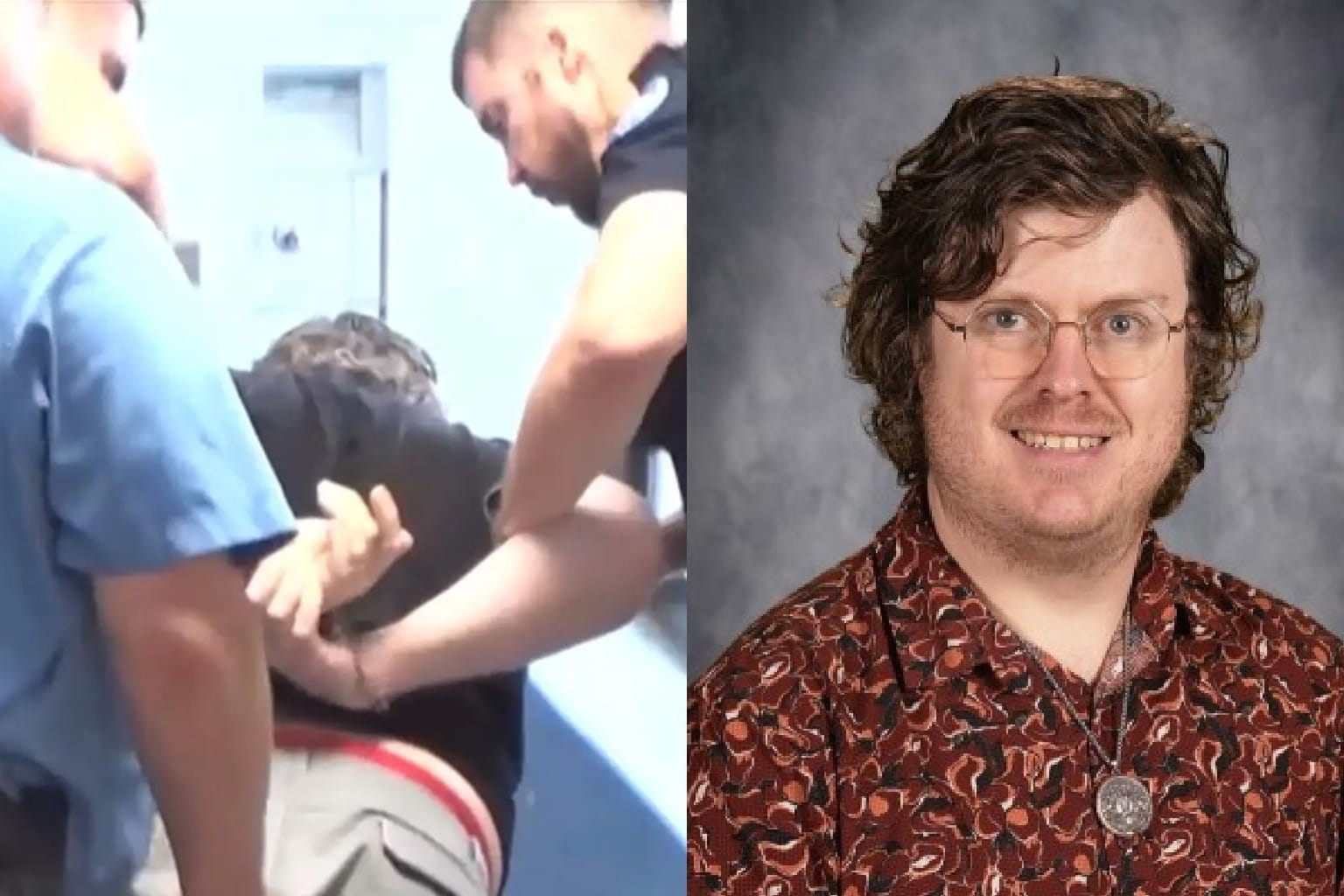
Last Wednesday, Lux Claridge planned to speak out against a proposed 1,000 acre data center in their town of Emporia, Kansas. They left in handcuffs after a city commissioner ordered them arrested for clapping.
“It was annoying,” Claridge told 404 Media. “So what happened was I clapped for the previous speaker. She hadn't even gotten back to her seat before I stopped clapping. My wife was on the way up to the podium. The time for my wife's speech hadn't even been reset yet [...] you see the 51 seconds remaining from the previous speaker. So I don't know what I was disrupting exactly, but I was not clapping the entire time.”
The big topic in Emporia, a town of 20,000 people, is the proposed Flint Hills Digital Campus — a massive data center that would eat up prairie land near Claridge’s home. There’s been several zoning and city commission meetings about the project and Claridge has been there for many of them.
“They’re talking about a gigawatt facility and our local power facility pushes out maybe a gigawatt on a monthly basis, which is something I brought up on my first speech, June 3, I was like, ‘Where are we getting this power from? Because Wolf Creek’s not going to do it,’” they said. Wolf Creek is a local nuclear power plant. “We’re talking millions of homes of power, that’s how much energy we’re talking about here. It’s not thousands, it’s millions.”
Claridge is not opposed to data centers outright, but they do think the current Flint Hills Digital Campus is a terrible idea. They planned to restate their position at the city commission meeting last week where they were arrested. “I was going to basically just call them out on all the potential lies that seem to be surrounding this. It was the week before [...] The news broke that Gary Pinkston, the developer behind this, under sworn testimony in his bankruptcy case, said has no idea what the digital campus project is. He has no interest in it,” Claridge said. “He said the Kanza Park [the LLC behind the project] is his daughter's thing.”
An open letter to the community from Pinkston appeared in both the Emporia Gazette and on the website for the Flint Hills Digital Campus. In the bankruptcy hearing, Pinkston’s creditors asked him if he’d written the letter. “And he said no. And he said he couldn't tell us who did write it. And we're like, ‘Hold on, what's going on?’” Claridge said. “So I had like four points of, you know, kind of catching them in some inconsistencies and asking them about it. You know, who is this Gary guy? Does he work for this or not?”
During the meeting, the commission warned the crowd to stop clapping multiple times, but Claridge walked into the room after the warnings. “We continued to clap, though eventually it started moving to snapping fingers, all beatnik style,” Claridge said. “I did that a little bit too, but in total, I clapped for 13 speeches. I snapped five times, and there were three warnings, a final warning. Then I finally got arrested.”
On the recording you can hear commissioner Monica Duncan tell the police chief to toss out the next person who claps. Claridge had just finished their clapping for a speaker. Their wife was at the podium. “He instead just walks right up to me, tells me to get out, and then, well, you saw what happened. I went to the floor.”
In footage of the meeting published on social media and Emporia’s city commission page, Claridge tells the cops they have a first amendment right to speak. The police ask them to leave and Claridge tells them to “drag me out.”
“I felt like I had a right to be there to voice my concerns,” Claridge said. “I am fully of the notion that clapping is a First Amendment right that I have. I can exercise that as long as I'm not disrupting, and I still argue that I was not disrupting at all. But I basically told them that you know, yeah, I have a right to speak. I'm here to speak. I have a right to clap, and if you want me out, you're going to have to drag me out. And I just stood firm and, well, sat firm and said ‘drag me out’ a couple of times so they knew for sure what I was about.”
They said that the police charged them with disorderly conduct and came back two hours later to add interfering with a law enforcement officer. Emporia PD has refused to share a copy of Claridge’s arrest report with 404 Media, saying it “could interfere with ongoing investigative efforts.”
Claridge said their wife crowdsourced a bail fund from the local community and they were out of jail about eight hours after they’d entered. “They told me my court date was September 10 in the morning,” Claridge said. “Thankfully, while I was in jail, a family friend who's also an attorney texted me and said: ‘Hey, I think you might have some legal trouble coming up in the future. I would be happy to represent you.’ So I do have a lawyer. He seems pretty gung ho about all this, and so I'm really excited to see how this all shakes out in the court.”
The charges haven’t stopped Claridge from talking about the data center — they’ve been commenting on news stories about Emporia and the arrest on social media. “This is a First Amendment thing so you bet your butt I’m going to be speaking out and talking,” they said.
The arrest is a strange twist of fate. Claridge said they’d had a good relationship with the commission before this. “Monica was actually my quote unquote ‘favorite person’ on the commission, as loosely as I can use that word. So I was very shocked when it was her that probably ordered the arrest,” Claridge said.
The city had even invited Claridge and their wife on a fact finding mission to Pryor, Oklahoma in June. Pryor is home to a massive data center campus that hosts clients like Google and DuPont so Emporia and some of its citizens went to learn how Pryor was feeling about it. Claridge filmed portions of the trip and uploaded them to YouTube.
“I was really impressed with what I saw in Pyror, Oklahoma. I saw all the ad valorem taxes go into things like schools and fire department upgrades. Like the town was wonderful down there, and they brag about how they don't take any state or federal money for their school system. It's all paid by the data center, and I think that's brilliant,” Claridge said. “I would love to see something like that if we can make the benefits outweigh the costs. So you know, do your due diligence. Look into what's being done, what's being promised, and if you don't like it, you know you can always petition and restructure your government or recall your government. That's basically what we're working on now. We got three petitions in the works to try to restructure the city commission into more of a city council situation.”
Claridge isn’t against data centers as a rule, they just want to make sure it’s done right. But the oddities around the bankrupt developer, the current plan to use 1,000 acres of prairie land, and the combative attitude of the city commission are problems. Claridge pointed out that there are already large tracts of land zoned industrial with buildings that have been empty for 20 years. “We have all these properties already ready to go, even in an industrial park four where they want to extend this park. But instead, they just want to build brand new buildings on prairie lands and lands that are like really in people's backyards,” they said.
There’s another meeting in August and Claridge said that the arrest won’t stop them from attending. “From my perspective, these are my representatives and they’re beholden to me and my fellow community members and so I’m definitely going to go and try to make my voice heard,” they said.
Claridge also said they plan to give a speech in the near future, but they haven’t worked out the details. “And I've heard that a lot of people are planning on coming and being goofy, you know, or a standing ovation or different gestures or whatever,” they said. “They really just make fun of the commission for being so upset over clapping.”
 Log in