James Talarico, the Democratic Texas senator-elect, not only managed to flip the state in yesterday's midterms but prevailed in the most expensive Senate election to date. More than $573 million was spent on advertisements between Talarico, his Republican opponent Ken Paxton, and their aligned PACs. And a big chunk of that money came from just one man: Elon Musk.
Musk reportedly spent more than $445 million supporting Republicans in the midterms, making him not only by far the biggest donor in the 2026 election cycle but also in American history. And most of his money was spent in Texas, his home state and the headquarters of both Tesla and …
When Donald Trump began his second term as president, Silicon Valley gratefully embraced moral nihilism. Google, Amazon, Microsoft, and more collectively donated millions to Trump's inauguration fund to ensure his favor in a new era of gangster tech regulation. Meta overhauled its content policy to allow calling gay people mentally ill and women property. Elon Musk started throwing Nazi salutes - yes, allegedly, but he would soon be posting nonstop about protecting the white race from extinction, so that's the most fragile of fig leafs.
As of mere months ago, this was working out pretty well for them. The Trump administration took a mostly …
Sixtransgender and nonbinary candidates made history on Election Day by winning races in states that have never elected a trans person into their legislature before. These candidates will expand LGBTQ+ political power at a time when their rights are increasingly under attack nationwide. All races are called according to projections by Decision Desk HQ.
Georgia
Bentley Hudgins will be Georgia’s first nonbinary and first Japanese-American lawmaker after winning their bid to represent State House District 90 in east Atlanta. They easily defeated their opponent, Republican Samantha Boston, in the deep-blue district.
Hudgins, a 33-year-old democratic socialist, spent the last three years advocating for LGBTQ+ rights in the Georgia statehouse through their work with the Human Rights Campaign. But LGBTQ+ issues were not core to their campaign: They ran on affordability, expanding healthcare access and broadly protecting civil rights. Those issues are personal for them. As they had told The 19th, Hudgins faced homelessness and barriers to accessing care for cluster headaches and seizures. They were diagnosed as legally deaf at 19, and had to have their eardrums rebuilt.
Many of Hudgins’ campaign goals, like raising the state minimum wage to $20 an hour or creating an earned income tax credit to give money to lower-income Georgia families, depend on whether Democrats gain enough leverage in the state House to influence policymaking. The party needs to gain 10 seats in the chamber to reach a majority — and as of Wednesday morning, that feat looks possible.
Michigan
(Courtesy of Joanna Whaley Campaign)
Joanna Whaley, a hospital chaplain, will be the first trans person elected to Michigan’s state legislature after winning her race for House District 2, outside Detroit. A former megachurch pastor who has spoken openly about surviving years of “conversion therapy” as a young adult, Whaley acknowledged after winning her primary in August that her victory was “a defining moment for state history,” but added that her campaign “has never been about history.”
She handily defeated her opponent, Republican Ron Kokinda, with 63 percent of the vote.
Whaley ran on securing fair wages for workers, supporting statewide job training programs and lowering the cost of utilities and medical debt. She was endorsed by U.S. Rep. Sarah McBride of Delaware, the only trans member of Congress, and Abdul El-Sayed, who became the nation’s first Muslim senator on Tuesday. She was also backed by progressive advocacy groups and Democrats in the state legislature.
Whaley’s primary was contentious at times. In April, her Democratic opponent, former Michigan state Rep. Frank Liberati, claimed Whaley had violated state campaign law by omitting her deadname, or the name she used before transitioning, from the affidavit of identity she submitted to run for office. A county clerk denied Liberati’s challenge to Whaley’s candidacy in May.
Alabama
(Courtesy of Allison Montgomery campaign)
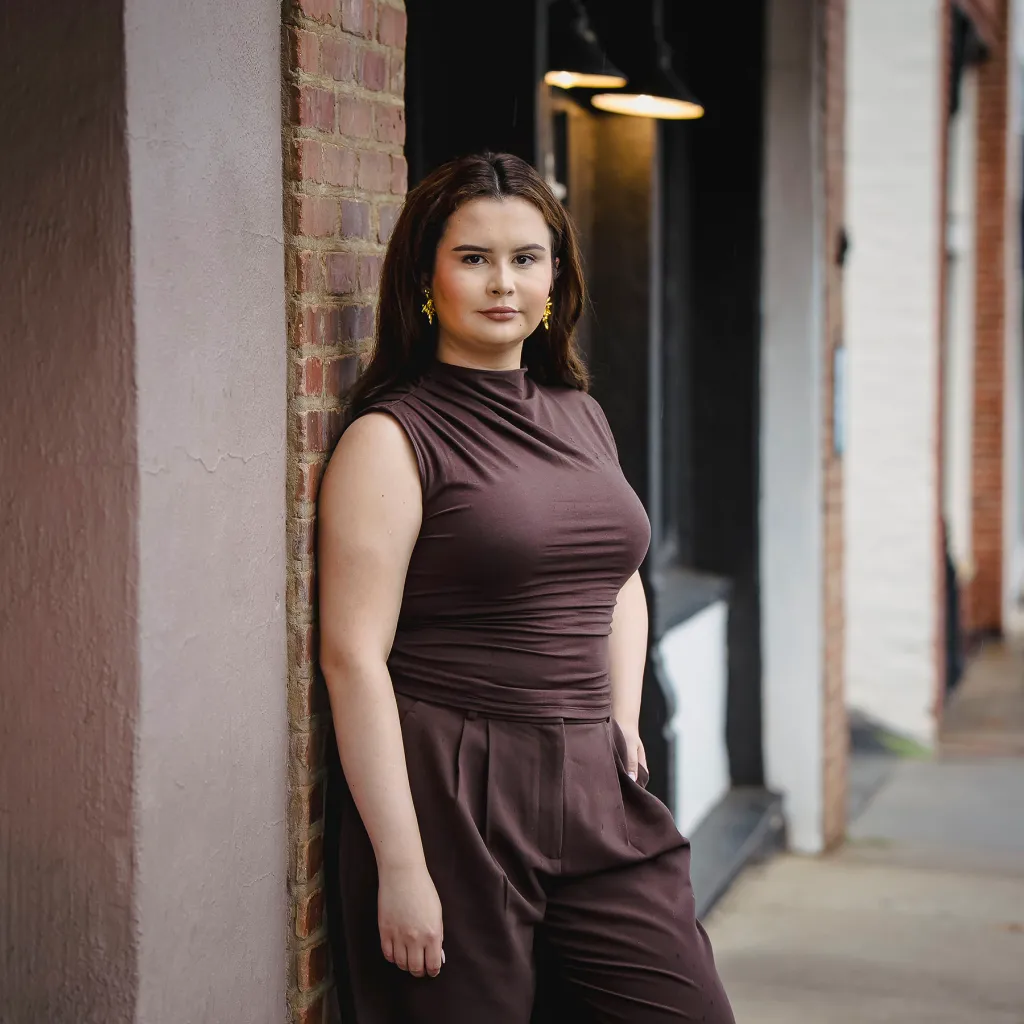
Allison Montgomery will be Alabama’s first trans lawmaker after winning her bid for state House District 25, defeating incumbent Republican Rep. Phillip Rigsby. A software engineer and lifelong Alabamian, Montgomery ran on broadening access to healthcare, strengthening workers’ rights and eliminating the state’s grocery tax.
“I know the headlines tomorrow are gonna be provocative and catchy, but let’s focus on the most important part of this victory: we showed that a truly grassroots campaign that stands on its policies and its principles has a real shot in Alabama,” Montgomery said in a statement on Tuesday after her race was called. “We the people are tired of attempts to distract us with culture war issues, whether we’re in a minority group or not. We the people know corporate interests use these issues to pit us against one another while they pick our pockets.”
She added: “I’m going to work especially hard for those who hate me, because they deserve a better Alabama as much as anyone.”
Washington
(Courtesy of Jaelynn Scott Campaign)
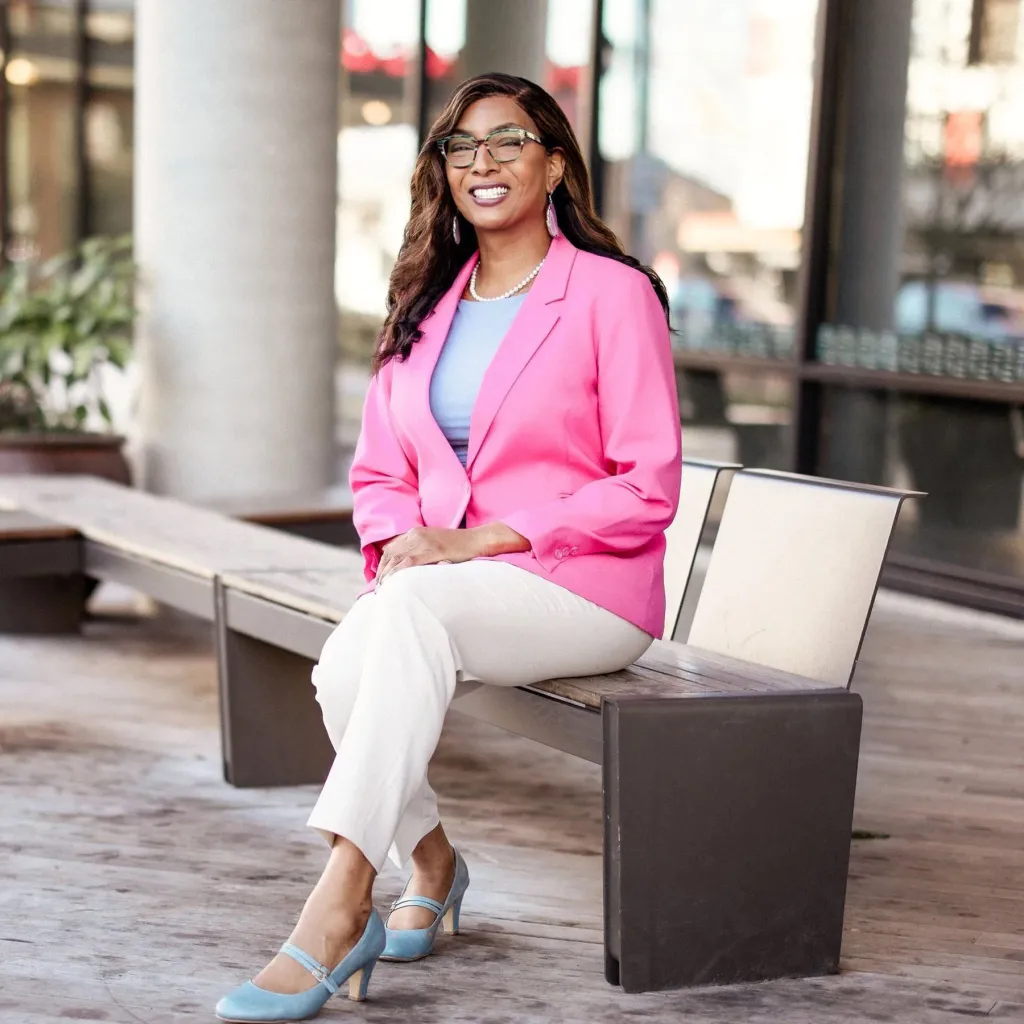
Jaelynn Scott will be Washington’s first trans state lawmaker — and the first out Black trans state lawmaker elected in the country — after winning her bid for state House District 37 in southeast Seattle. She easily defeated her opponent, independent Evon McCorkle, a college student, with 88 percent of the vote.
Scott, a member of the Democratic Socialists of America, is the executive director of the Lavender Rights Project, a Black- and trans-led civil rights nonprofit based in Seattle. Her pitch to voters centered largely on affordability, universal healthcare and taxing large corporations and billionaires. In an interview with The 19th on election night, Scott said she plans to lead “with love and compassion and empathy.”
“It’s pretty surreal,” she said of her barrier-breaking win. “The fact is, people that look like me and have my identity in 2026 are used to being under attack — not leading. I think it was because of what’s happening to us, and really maybe even a bit of fear about what might happen to me and my community, that inspired me to run. I never thought we would get this far.”
Wisconsin
(Courtesy of Dina Nina Martinez-Rutherford Campaign)
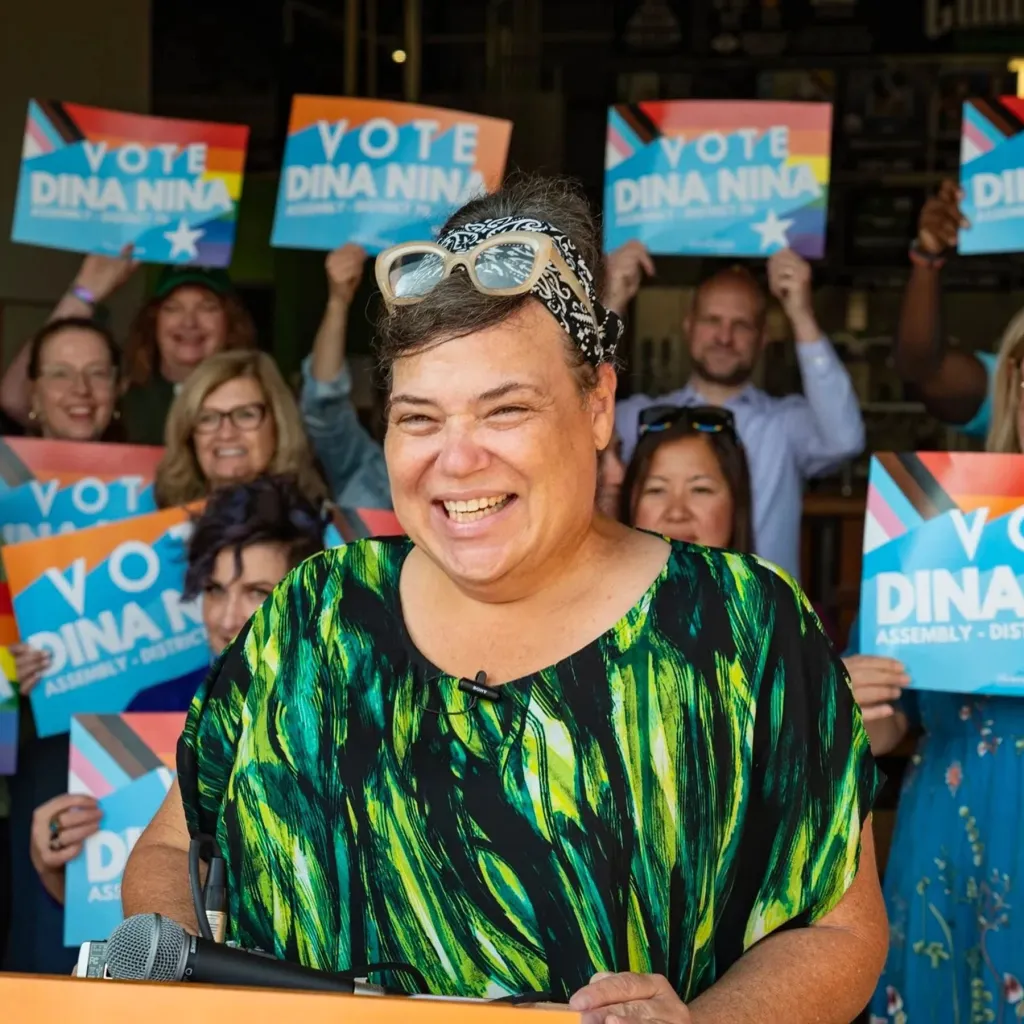
Dina Nina Martinez-Rutherford will be the first trans person elected to the Wisconsin state legislature after winning her race for state House District 76. She defeated her opponent, Republican Nina Chat, with more than 90 percent of the vote in the deep-blue district.
Martinez-Rutherford, a former food service worker, comedian and small business owner, made history in 2023 as the first trans woman elected to the Madison Common Council in the state capital. She’s spoken previously about experiencing housing and financial insecurity.
Martinez-Rutherford’s campaign centered largely on economic issues, promising to fight for a living wage tied to inflation, affordable housing and access to quality healthcare.
Florida
(Courtesy of Quinnie Perez Campaign)
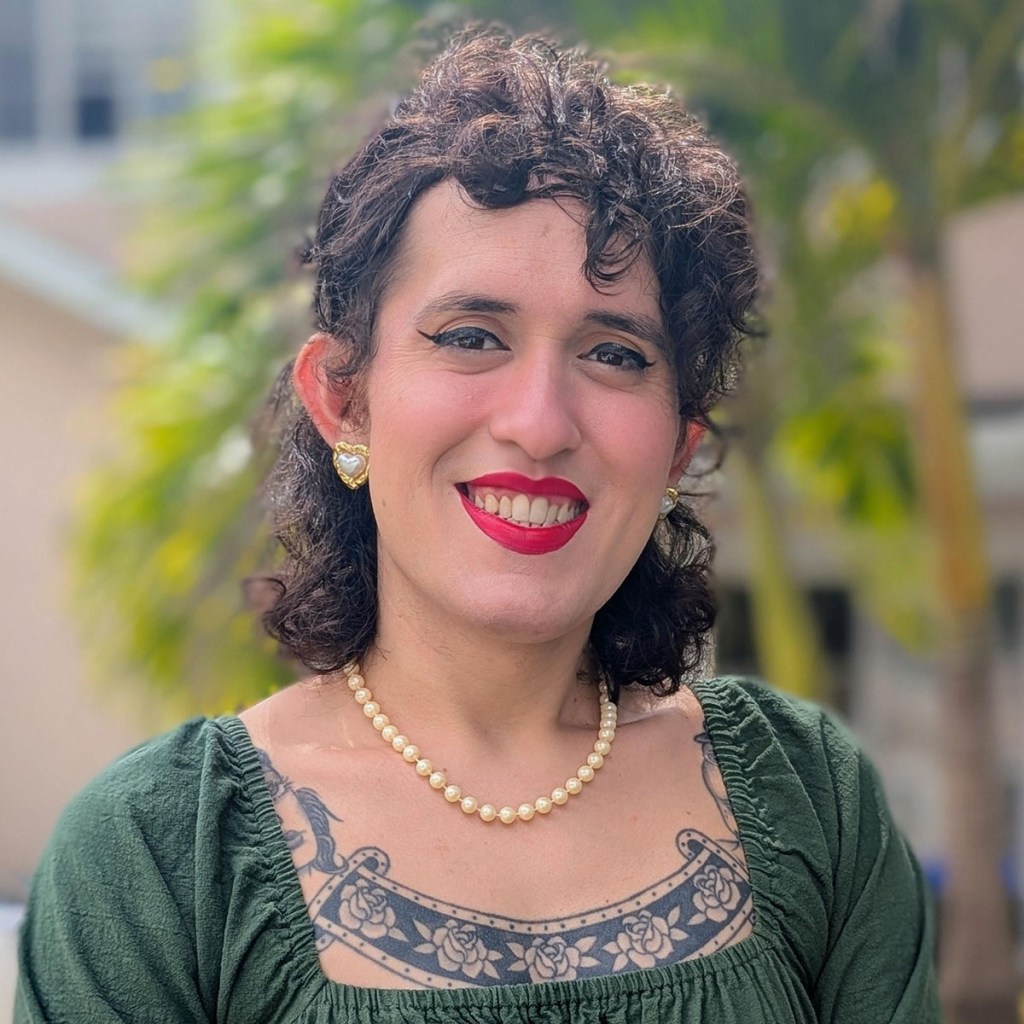
In a hyperlocal race that still breaks national barriers, Quinnie Perez is projected to win her seat on the Orange County Soil and Water Conservation District. This humble board lacks a budget and has little power, but Perez winning the position in Seat 1 makes her the first trans woman ever elected in Florida.
Perez ran on supporting farmworkers with fair wages and safe conditions, highlighting her family history as the daughter of Mexican farmworkers, as well as wetland restoration and building green infrastructure.
Several other transgender candidates still made history, although they didn’t win. They ran in deep-red, conservative districts, taking on difficult fights without any guarantee of success. Some were the first Democrats to run for their seats in decades, signaling a new energy to run for office among trans people even as their identities become increasingly politicized. Others have had their candidacies or ability to vote questioned by local authorities due to their gender identity.
Georgia
Bella Bautista, the Democratic nominee for Georgia State House District 14, in Cartersville, GA September 11, 2026. Nicole Craine for The19th News
(Nicole Craine for The 19th)
After Bella Bautista decided to run for Georgia State House District 14, she went on to become the first trans woman to win a legislative primary in Georgia. Her race was a long shot: Her district hasn’t elected a Democratic state representative since 1996. She ran anyway.
She is the first Democrat to run for this seat since 2010 — and it put a target on her back. As she told The 19th, this campaign cost her privacy and peace, leaving her feeling isolated in her rural and heavily conservative district. But she said she was determined to challenge the status quo. Her campaign focused on affordability, protecting rural land and fighting data centers.
Kansas
(Courtesy of Bobby Robertson Jr. Campaign)
Bobby Robertson Jr., a trans woman and financial analyst, lost her race for Kansas House District 73. But she still broke barriers as the first Democrat to challenge this seat in 10 years.
She decided to run for office after the statehouse passed SB 244, a law that invalidated thousands of trans Kansans’ drivers licenses based on gender identity, over the governor’s veto. She wrote several letters to her state representative, Republican Rick Wilborn, explaining how the law would hurt her and her family. According to Mother Jones, she asked him to meet. She never got a response. So she decided to act.
Avery Rowland, another trans woman in Kansas, ran to represent House District 2, in the bottom-right corner of the state. According to a report by Kansas Reflector, a state GOP official questioned her eligibility to vote over the state law that targeted trans residents’ drivers licenses.
Ohio
(Courtesy of Arienne Childrey Campaign)
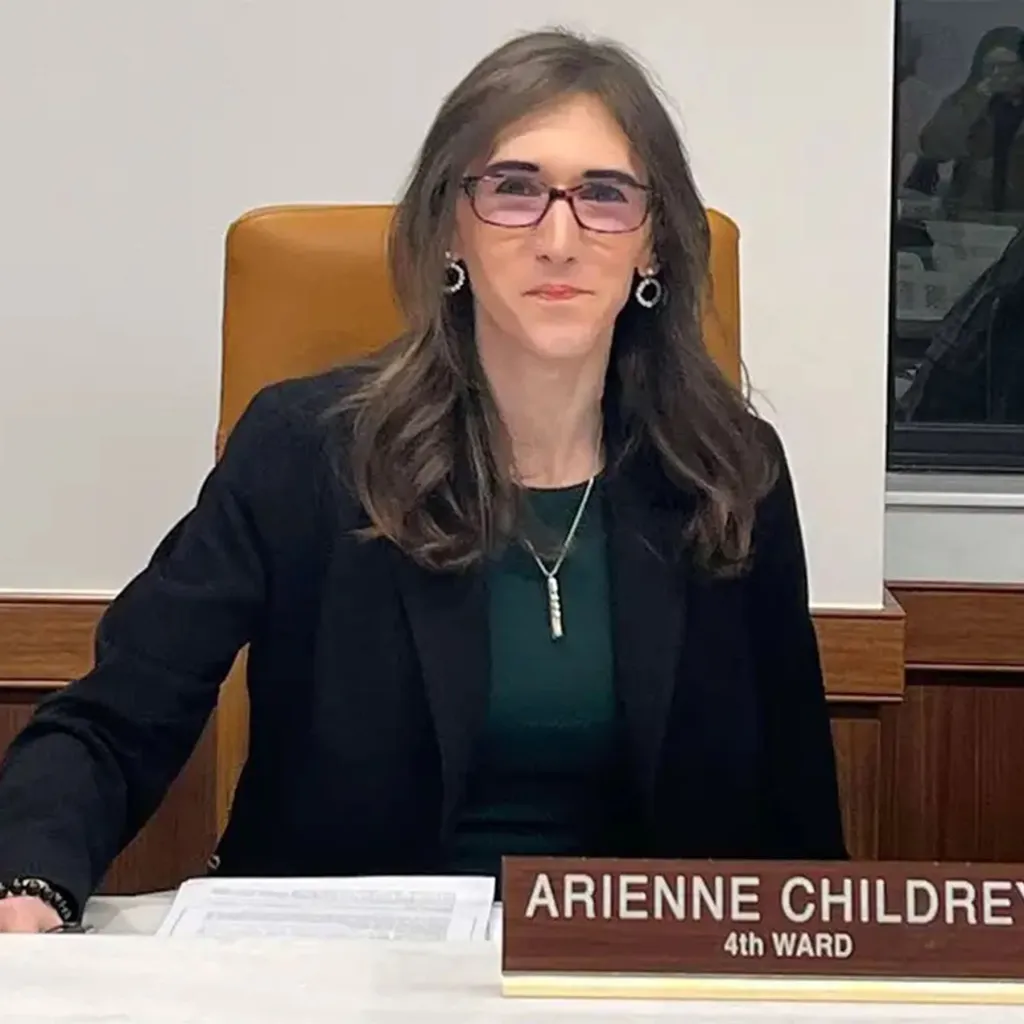
Arienne Childrey previously challenged Republican incumbent Angie King in Ohio’s House District 84 in 2024 and lost. She lost again this election cycle.
Trans Ohioans have seen overt efforts to keep them off of the ballot in the state. Childrey’s ability to run for office was challenged in 2024 because she omitted her deadname on petition paperwork. She had legally changed her name years ago and had no idea about the obscure Ohio elections law that brought her candidacy into question.
Arizona
(Courtesy of Aiden Swallow Campaign)
Aiden Swallow, a military veteran of nearly two decades, lost her bid for Arizona House District 19 to former Republican state Sen. David Gowan. Swallow previously ran for Congress in Arizona’s 6th district, but dropped out of that race last year to run for the statehouse.
In this race, she faced two Republicans on the ballot as well as another Democrat, Jackie Anderson, a retired emergency room nurse.
Swallow’s campaign took a hard line against President Donald Trump and the MAGA movement in a GOP-controlled district — and that stance was personal. Shewas kicked out of the military in 2025 due to Trump’s nationwide ban on trans service members, which was allowed to stay in place by the Supreme Court. She was removed from her military position without retirement benefits, according to her campaign website.
It started quickly, with Georgia's Senate race being called for Jon Ossoff 18 minutes after polls closed, and never let up. One by one precincts returned blue. The map was bluer than you've ever seen. Places went blue that haven't gone blue in a lifetime. It was bluer than a Lenny Bruce set. By the time it was called in Michigan for Abdul El-Sayed at 1:00 a.m. EST and Steve Kornacki was propofol'd and dragged off air for the night, both the House and the Senate were firmly in the hands of the Democrats, a blue wave not seen since the post-Watergate midterms of 1974, and for many of the same reasons.
If a race held any uncertainty, it broke left. The long-held dream of blue Texas is here, and resoundingly. The North Carolina House, redistricted last year by Republicans to safely go 11-3 in their favor, is going to end up something like 10-4 Dems. Washington D.C. elected a democratic socialist mayor. Michigan elected the nation's first Muslim Senator, New Hampshire our first openly gay man. It is hard to overstate how complete and far-reaching this blue tsunami was. Alabama elected a transgender woman to the House. One Maryland county's Democratic candidate for sheriff barely campaigned—he says he hates public speaking, and bought no ads—and won.
Democrats largely stayed on message and campaigned smartly on the real things people care about—the economy—but that Maryland sheriff race best illustrates what was actually being voted on. This was a nationwide referendum, on Republican rule and on Donald Trump. And it turns out that while voters may be prone to touching a hot stove, they will not keep their hands on the burner for ever.
Democrats are projected to win back the U.S. House — and hit a major milestone. For the first time ever, at least 100 Democratic women are expected to serve in the chamber simultaneously.
“Women made history because we showed up to vote, and then voted in more than 100 Democratic women to serve in the House,” Rep. Teresa Leger Fernandez of New Mexico, the chair of the Democratic Women’s Caucus, said in a Wednesday statement.
She added: “Women have borne the brunt of the Trump administration’s recklessness and Republicans’ extremist agenda, and on Tuesday they made it clear they have had enough.”
“We think 100 is a great number. It’s sort of a showcase number,” Rep. Lois Frankel of Florida, a founding member of EDW, said in 2025. “Of course, we would want more, but I think there’s something about hitting 100, right?”
The milestone is the culmination of decades’ worth of work recruiting and fundraising for Democratic women by groups like EDW and Emily’s List, founded in the 1980s. In 2026, the House battleground was at gender parity: of the 31 House seats Decision Desk HQ projected Democrats would flip as of 2 a.m. on Wednesday, 15 of those districts were flipped by women candidates.
“When you get women candidates, they just tend to be really high-quality candidates who are highly motivated, highly educated, in it for the right reasons, and have a drive to support their communities, and I think that that affects the qualities of races that they run,” Rep. Melanie Stansbury of New Mexico said last year.
They won in a variety of races, picking up seats in districts across the country in contests fueled by voter anger over rising prices and perceptions of corruption.
In some races, women candidates challenged Democratic incumbents. Rep.-elect Jasmine Clark of Georgia launched a campaign against the late Rep. David Scott before he died in April at 80. Reps.-elect Melat Kiros of Colorado and Daraliza Avila Chevalier of New York, both democratic socialists, unseated sitting House Democrats in their safe-blue districts.
All three made history. Clark will be the first Black woman Ph.D. scientist in Congress, Kiros will be the first Black woman to represent Colorado and the first Generation Z woman in Congress, and Chevalier will be the first woman of Dominican descent in Congress.
Jeannette Rankin became the first woman to serve in Congress in 1917, three years before the 19th Amendment granted women the right to vote — a right that was still restricted for many women of color. Women are half of the U.S. population, but hold just 28 percent of the seats in Congress. Just 445 women have served in Congress, making up only 3.5 percent of all those who have served in either the House or Senate.
The House had segregated gyms until 1985, when then-Rep. Barbara Boxer led a successful effort to integrate the far-superior men’s gym. There wasn’t a women’s restroom off the Senate floor until 1993, and it took another 18 years for House women to get a designated restroom off of the House floor, in 2011. A bipartisan but ultimately unsuccessful effort last year to allow new mothers in the House to vote by proxy showed how the Capitol is, in many ways, still not caught up to the realities of mothers in the workforce.
Vice President Kamala Harris’ defeat in 2024 dashed, for the second time, the hopes of many to see the United States’ first woman in the Oval Office. But Stansbury believed 2026 would lay the groundwork to break that ultimate glass ceiling.
“I think this era that we’re living through, when we elect our first woman president, we’ll see that the work that we’re doing now is what made it possible for that to happen,” she said.
Thank you, America, you understood the assignment.
But also, Jesus, what a faceplant for Trump and all of the Republican party. Do you understand how much you have to have fucked up that Kansas elected a Democratic senator? That literally hasn’t happened since the New Deal. Do you know how much you have to have fucked up to have Mississippi still in play as of the writing of this post? MISSISSIPPI. You don’t get any more Republican territory than Mississippi, goddamn. Except maybe South Carolina, which just elected a Democrat to Lindsey Graham’s old seat. North Carolina elected a Democratic senator and flipped one of their state legislative bodies to Democrat.
And holy shit, Texas! Not just senator Talarico, not just Governor Hinojosa, but as far as I can tell every single statewide office went blue, down to and including the railroad commissioner. The Democrats look like they’re going to flip the Texas house, too. FUCKING TEXAS WENT BLUE Y’ALL. Not just a little, but a lot.
(And Ohio, too, where I live, but I’ll get to that in a second.)
Now, credit is due to the Democrats actually fielding decent candidates this year and doing the work — you don’t get Abdul El-Sayad into the senate (as an example) without Abdul El-Sayad being a generationally sensational candidate. But let’s make no mistake that this blue wave is a response to an administration and political party so corrupt and awful and, yes, actually fucking evil, that a certain number of people who have perennially voted red either voted blue or stayed at home, and a lot of blue-voting people who might have stayed home for a mid-term went out of their way to get to the polls this time around.
This election was a rebuke and a repudiation, and I hope to the sweet and merry God above that the Democrats remember that when they’re seated in January. They were not elected to office to play nice with the fascists in the halls of power. They were elected to punch them in the face, repeatedly, the president most of all, but, be assured, not only him. There is to be a lot of punching going on.
Now, Ohio. When I went to bed last night Amy Acton was elected governor and Sherrod Brown senator, but all the other statewide offices were still showing as red. Well, I just checked this morning, and holy buckets, every state office but auditor, including the Ohio Supreme Court seats, looks to have gone to the Democrats. By extremely small margins, to be sure! But you know what you call a win by an extremely small margin? A win.
And the US House races, with a new map that the state GOP designed to be gerrymandered as fuck to their advantage? Seven seats went to Democrats, which brings them to near parity with the GOP in a state with fifteen congressional districts. Shit, in my district, OH-8, Warren Davidson, who since 2016 has won his seat with between 60%-70% of the vote every election, scraped by this time with just 52% of the vote. The GOP nearly just gerrymandered themselves out of a state congressional majority. The GOP also looks to have lost its supermajority in the Ohio house, so, goodbye ignoring the governor’s veto for them. This is all excellent news.
As I noted the other day, and without taking away from the work of Acton, Brown and all the rest of the Democrats, it’s the fact the GOP voters, in their infinite wisdom, chose Vivek Ramaswamy as their candidate for governor in the primary, largely on the endorsement of Trump, that helped tip Ohio back into purplehood. It’s hard to overstate what a historically bad candidate Ramaswamy was, and ultimately how poor a fit he was for the Ohio GOP (much less any other Ohio voter). And even then he still got 44% of the vote, because tankies gonna tank. But 44% was not enough. So much for the power of a Trump endorsement in 2026.
Speaking of Trump, I have no doubt if the Democratic margins had been smaller this year that Trump would be doing his usual thing of belching about fixed elections and other such nonsense, but at the end of the evening the wave was high enough that even he couldn’t pretend that it was anything other than a wipeout. He rather meekly went on record that he would “respect the results” and then went on Truth Social to bluster that if he had been on the ballot things would have turned out differently. Motherfucker, you were on the ballot. Everything you’ve done in the last two years is why this election went the way it did.
I still expect Trump and his odious cronies to pull hijinks, and never forget that he is actually still president for two more years, unless he dies, resigns, is impeached, or just one day boards a plane for Russia just for fun and never comes back. We’re still stuck with him through January 2029. Adjust expectations accordingly.
But no matter what, last night was the beginning of the end of the Trump era. I’ve said such things before, mind you, and have been wrong. But I feel pretty good about this time. This wasn’t a normal election. Ask Texas about that. It’s not just a wave. It’s a sea change.
 Log in